Need emergency tree removal services in Haverhill?
Tell us about your tree and request an estimate. A provider in our network will reach out to talk through the job and next steps.
No obligation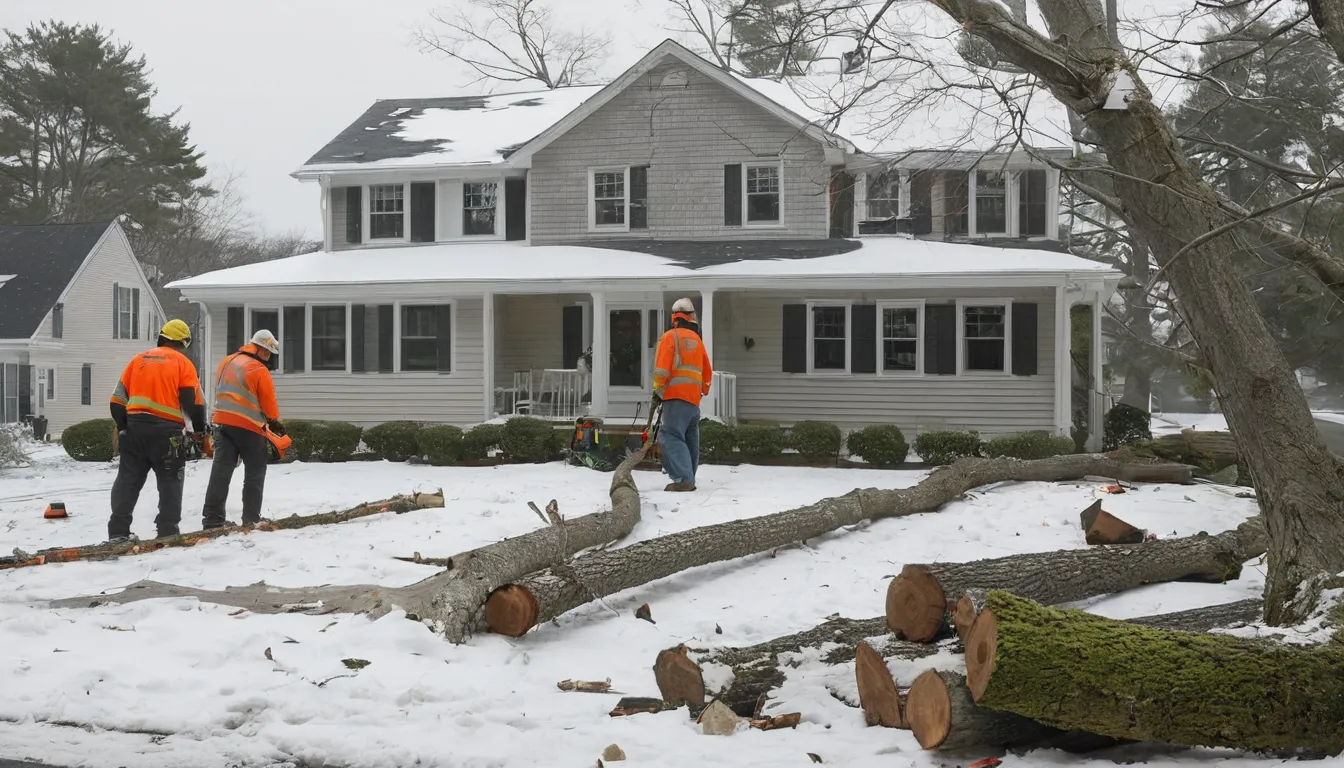
Request an estimate for your tree
Say you come home after a storm and a heavy limb is lying across the roof. Or a trunk blocks the driveway and you cannot get the car out. This page walks you through what to do, in plain steps, even if you have never hired a tree provider before.
Industrychase Tree Service is a referral service. We do not cut or haul trees. We connect homeowners in the Haverhill area with independent local providers who handle emergency tree removal, storm tree clearance and cleanup. Acting with care protects the house, the yard and its value later, because a rushed or unsafe job can turn one broken tree into several repair bills.
Say you step outside after a storm and a thick limb is lying across the yard. Your stomach drops. Take a breath. The first job is staying safe, not fixing the tree.
Keep everyone away from the tree and from the side of the house it touches. If you can see wires anywhere near it, stay out of the whole area.
A tree resting on a line can make the branches, the ground and even a metal fence unsafe. Treat every wire as live. Contact the utility company and keep kids and pets indoors.
Check the roof, gutters, porch and car from the yard. Do not climb, push or pull on anything. Take photos from several angles. Those pictures will help later with quotes and paperwork.
Not every messy yard is an emergency. These situations usually are:
A dead branch in the back corner can usually wait for a normal visit. Tell the provider which group your tree falls into so they can plan around it.
Picture a tree that tilts a little more each morning, with soil heaving at its base. That tree may be close to failing. Older homes with stone or block foundations and full basements can suffer from a heavy hit, so speak up early.
A local provider in our network usually starts with a look at the site. They check where the tree rests, what it presses on and which cut should come first.
Crews often take weight off first, such as limbs pinning the trunk against a roof. Then they lower the trunk in sections. This tree falling service is what most people picture, and it takes proper gear and training.
Storm tree clearance means cutting the fallen pieces, moving them off the roof, driveway or lawn, and raking up the debris. Ask whether hauling is in the quote or listed as an extra line.
If a stump is left behind, stump grinding is a separate job. Ask for it as its own line so the price stays clear.
Some policies may cover sudden damage from a fallen tree, but the details differ a lot. Check your policy before you decide anything. Providers can often help document damage for a claim with dated photos and a written description of the work.
Take photos before anything is moved. Save the written quote and the final invoice. Contact your insurer early and ask what they need from you.
Say a storm sweeps through and half the street has trees down. Providers get busy, and waits vary from place to place. Many providers can respond quickly, but it depends on the day. Request a callback to check provider availability.
Tell the provider the tree size, where it landed, whether wires are involved and how tight the access is. Narrow driveways and small lots near older homes can change the plan. Good details lead to a more accurate quote.
Cold winters, freeze-thaw cycles, spring snowmelt and coastal winds all stress trees. Protect the property by checking your trees each spring and fall.
If a tree worries you, ask a provider to look at it before storm season. Work on a calm day is usually easier on your yard, your roof and your budget.
Ask before cutting. A few plain questions can save you stress:
Providers cut and clear trees that have landed on roofs, cars, fences or driveways.
Broken limbs and storm debris are cut up and moved so your yard is usable again.
A provider checks leaning, split or uprooted trees and explains what is safe to do next.
Ask about hauling, wood chips and raking so nothing is left behind.
Prices vary with tree size, access, damage and timing. These are typical U.S. ranges only. Always get a written quote from the provider before work begins.
| Item | Typical range | Notes |
|---|---|---|
| Small fallen tree or large limb | $300 – $1,000 | Clear access, no damage to structures |
| Medium tree down in yard | $800 – $2,500 | Depends on trunk size and cleanup |
| Large tree on a roof or house | $2,000 – $5,000+ | Needs careful cutting and extra gear |
| Tree blocking driveway or road | $500 – $1,800 | Quick clearing for access |
| Debris hauling and cleanup | $150 – $800 | May be included or listed separately |
| Stump grinding after removal | $100 – $600 | Priced by stump size and roots |
Keep people and pets away from the tree, the house side it touches and any wires.
Record the damage from the yard before anything gets moved.
Share the tree size, location and damage so providers can plan.
Read the written quote, ask your questions, then approve the plan.
Clear, simple guidance so you know what to do before anyone arrives.
Independent providers who know the area and its weather.
Careful work helps guard your roof, yard and resale value.
Request an estimate and compare it before you decide anything.
Tell us about your tree and request an estimate. A provider in our network will reach out to talk through the job and next steps.
No obligationGet everyone out of the damaged area and stay away from any wires. Take photos from a safe distance, then contact your insurer and a local provider to plan the removal.
Some policies may cover sudden damage when a tree falls, especially if it hits a structure. Coverage varies, so check your policy and ask your insurer. Providers can often help document the damage for a claim.
In the U.S., costs often run from a few hundred dollars for a small fallen tree to several thousand when a large tree is on a roof. Size, access and cleanup change the price, so get a written quote.
Tell us about your tree and request an estimate. A provider in our network will reach out to talk through the job and next steps.
No obligation